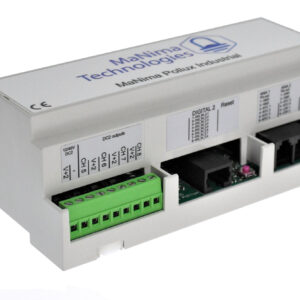
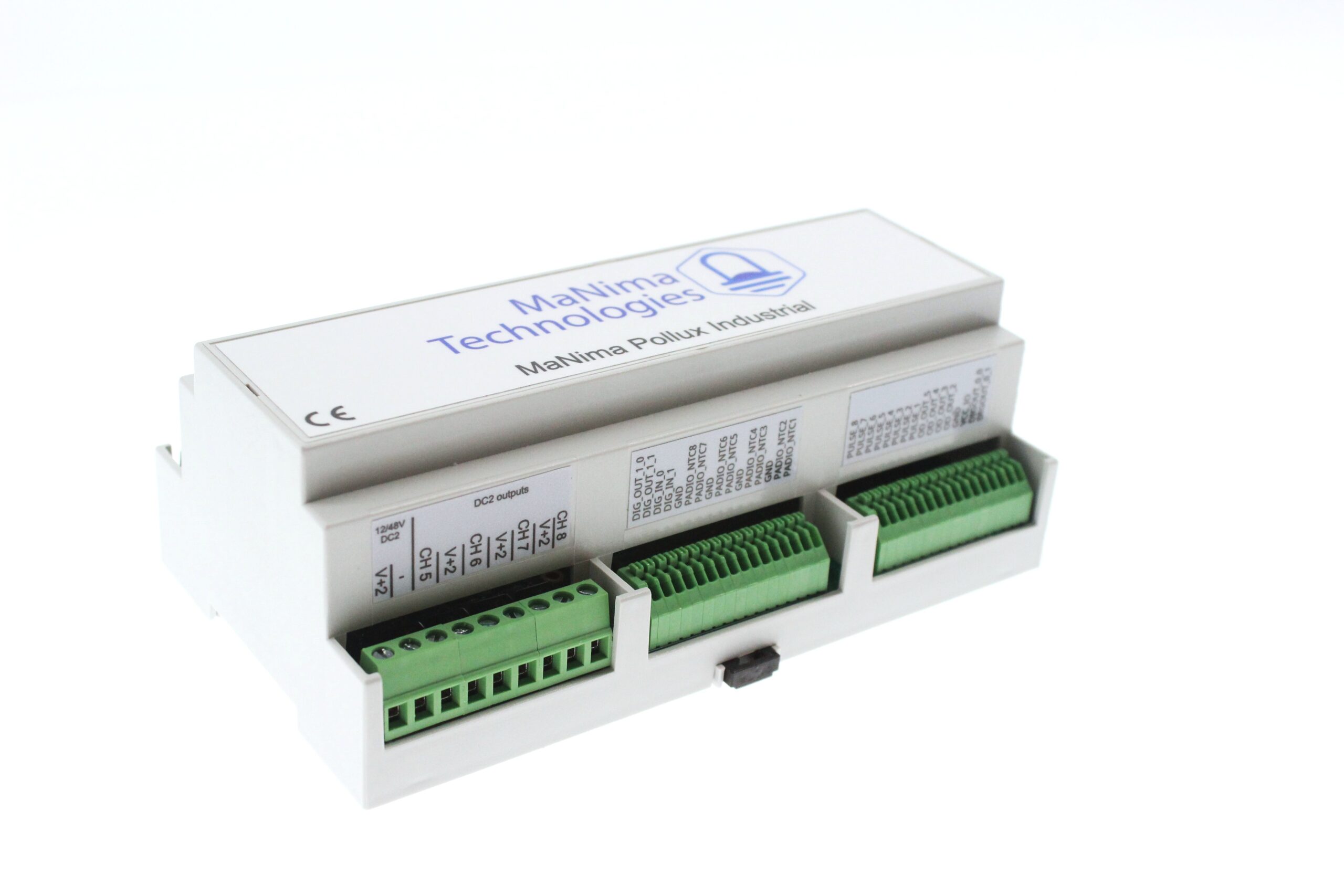
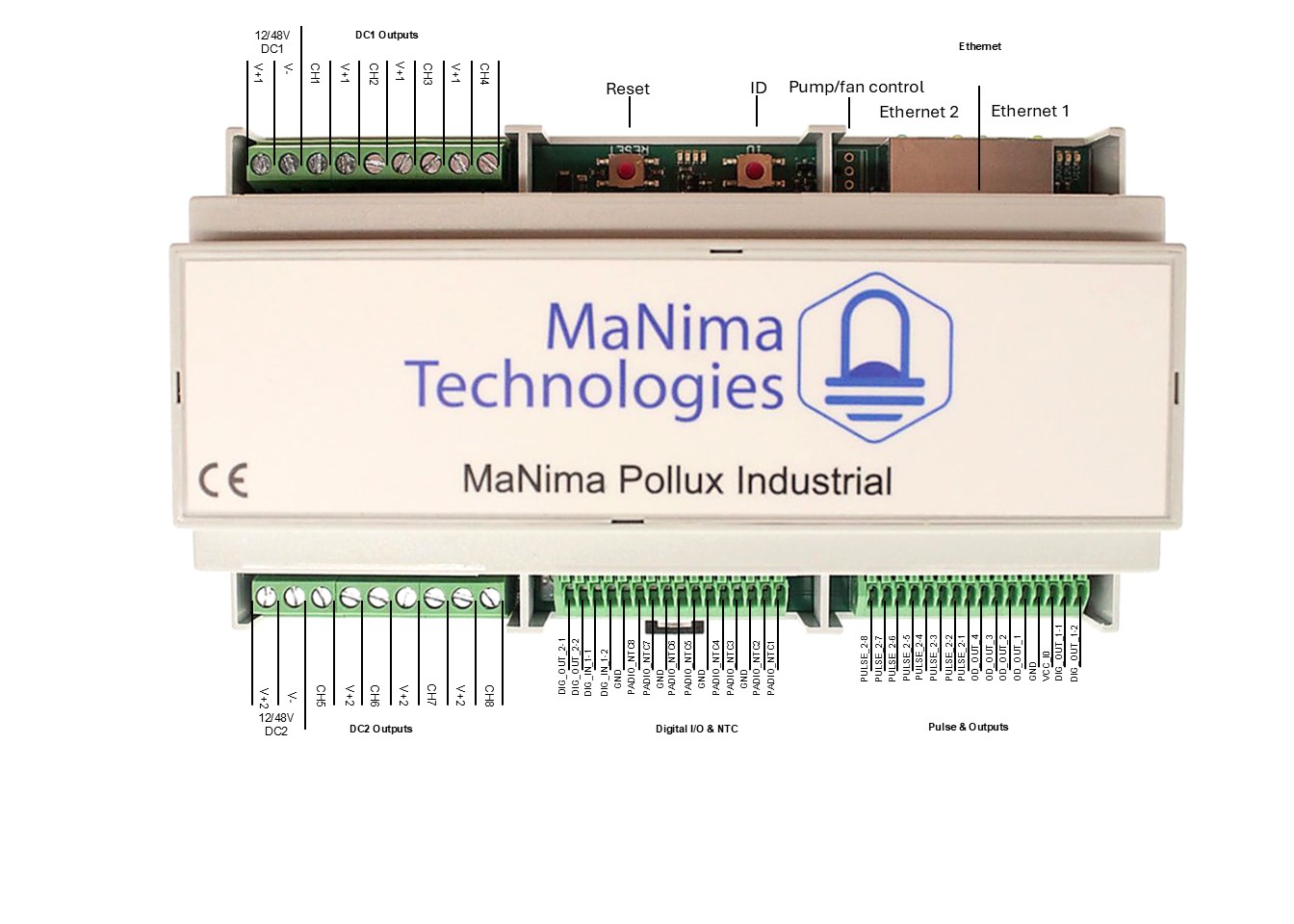
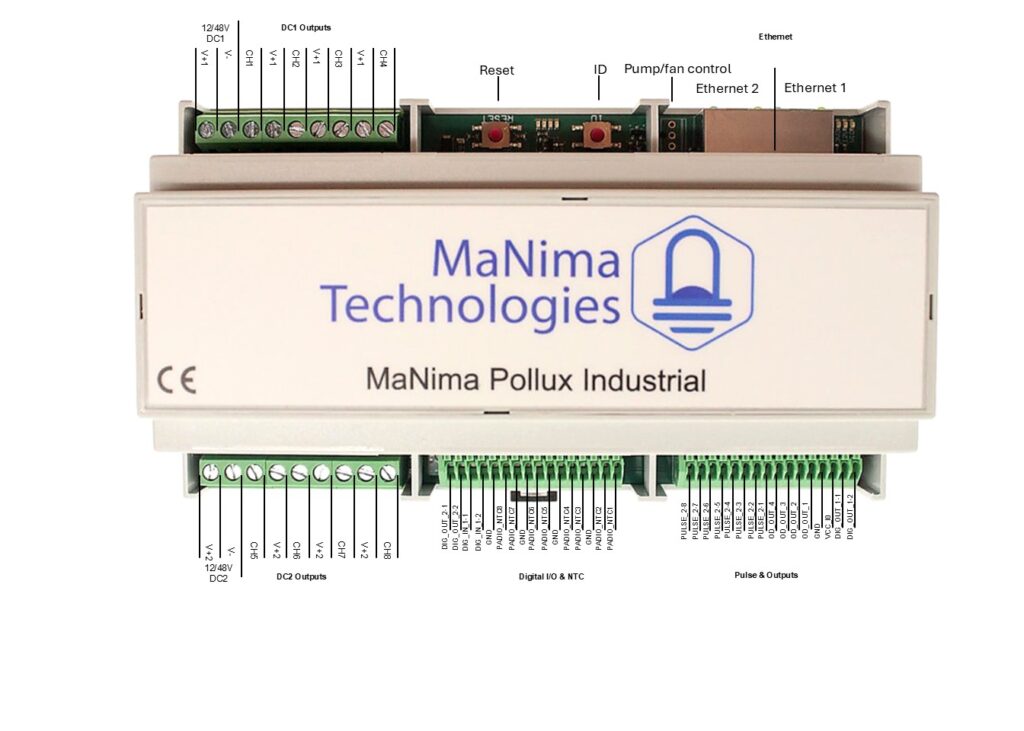
Meet the MaNima Pollux Industrial Nova — a ground-up redesign of our industrial PWM LED driver, engineered for demanding processes and harsh environments. Operating across a wide 12–48 V range, the Nova drives either 4×10 A or 8×5 A outputs, and its low channel resistance of around 20 mΩ keeps losses — and heat — to a minimum even at full load. This is not an incremental update: an all-new hardware platform gives the Nova substantially more, and far more flexible, I/O than any Pollux before it.
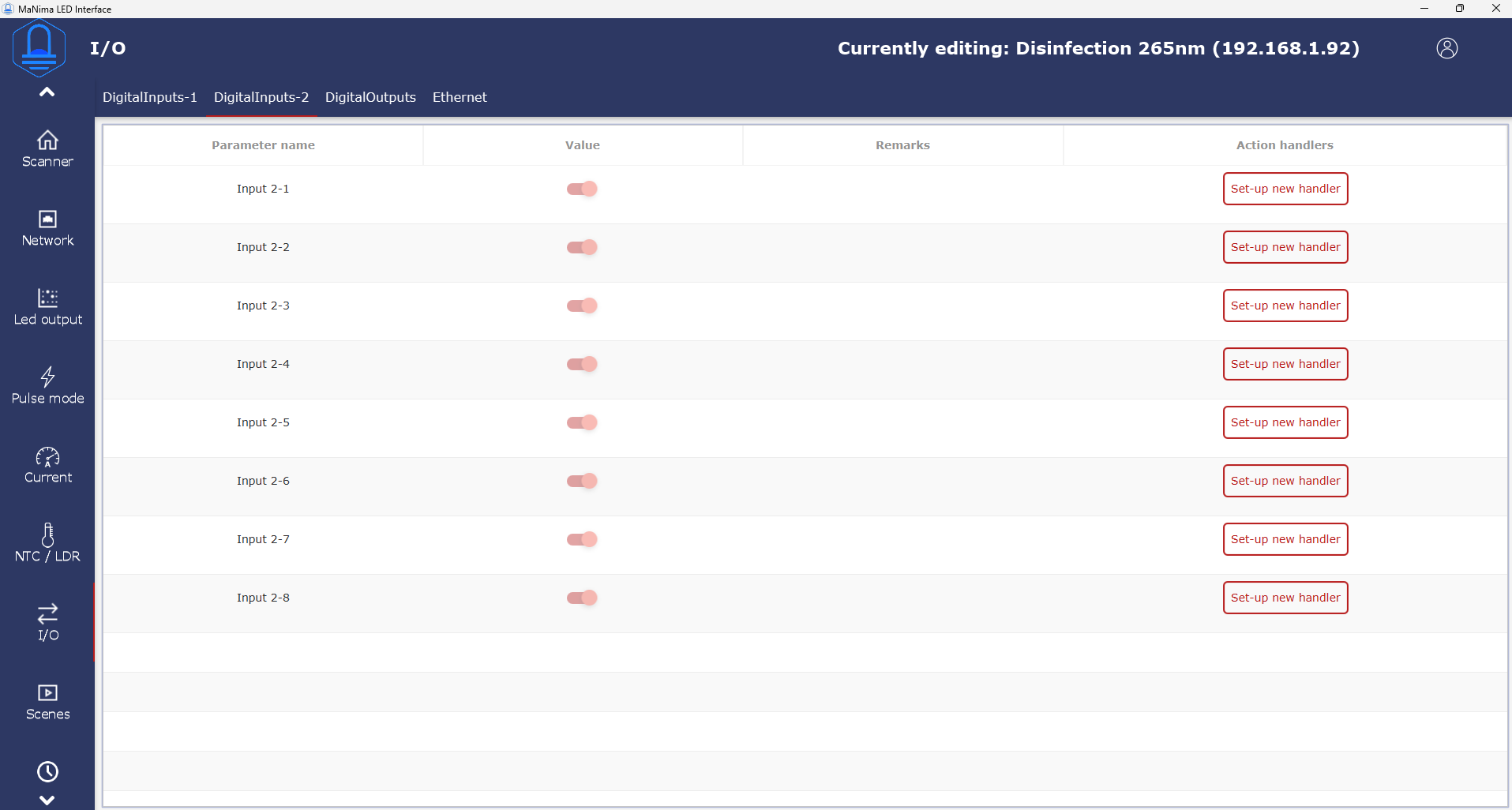
Configurable PADIO interface
At the heart of the Nova sits the PADIO interface — eight Programmable Analog/Digital I/O pins that adapt to your installation instead of the other way around. Each pin is individually configurable as an analog input for NTC temperature sensing, a digital input, or a PNP high-side output. The same connector fits the sensors and signals already in your machine, so wiring stays simple and later changes don’t mean new hardware.
PNP high-side outputs
Alongside the PADIO pins, the Nova adds four dedicated PNP high-side outputs that switch a user-supplied VCC_IO. Drive relays, indicator lamps or PLC inputs directly at the voltage your system already uses — no interface board in between.
Closed-loop active cooling
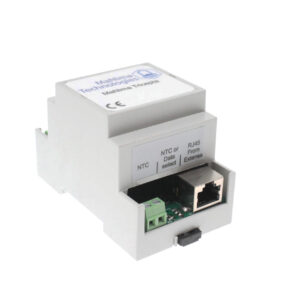
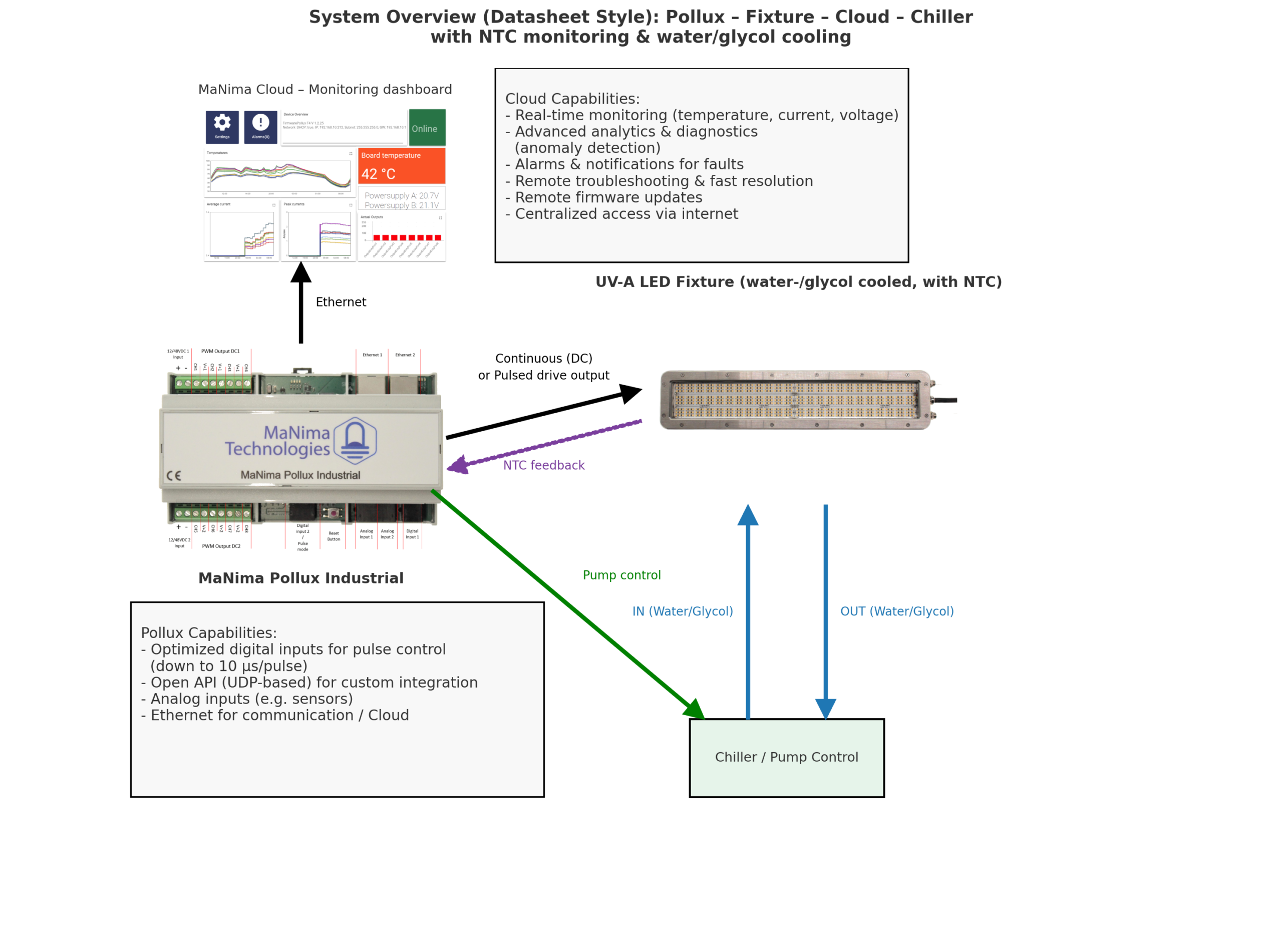
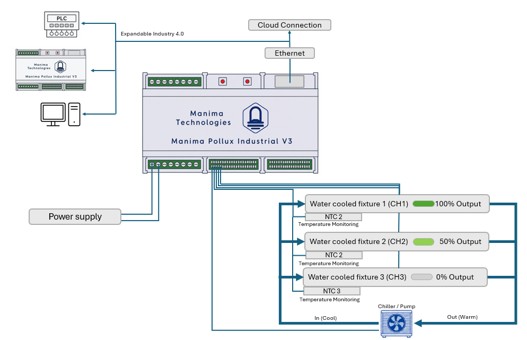
For water- and fan-cooled fixtures, the Nova brings cooling into the control loop. A dedicated 4-wire header drives a pump or fan over a 25 kHz PWM signal (up to 500 mA, 6 W at 12 V) and reads the tachometer back as live RPM — so the driver scales cooling to the measured fixture temperature and flags a stalled or failing fan before it can cause overheating. The tachometer line carries an internal pull-up, so a standard 4-wire fan connects without extra components.
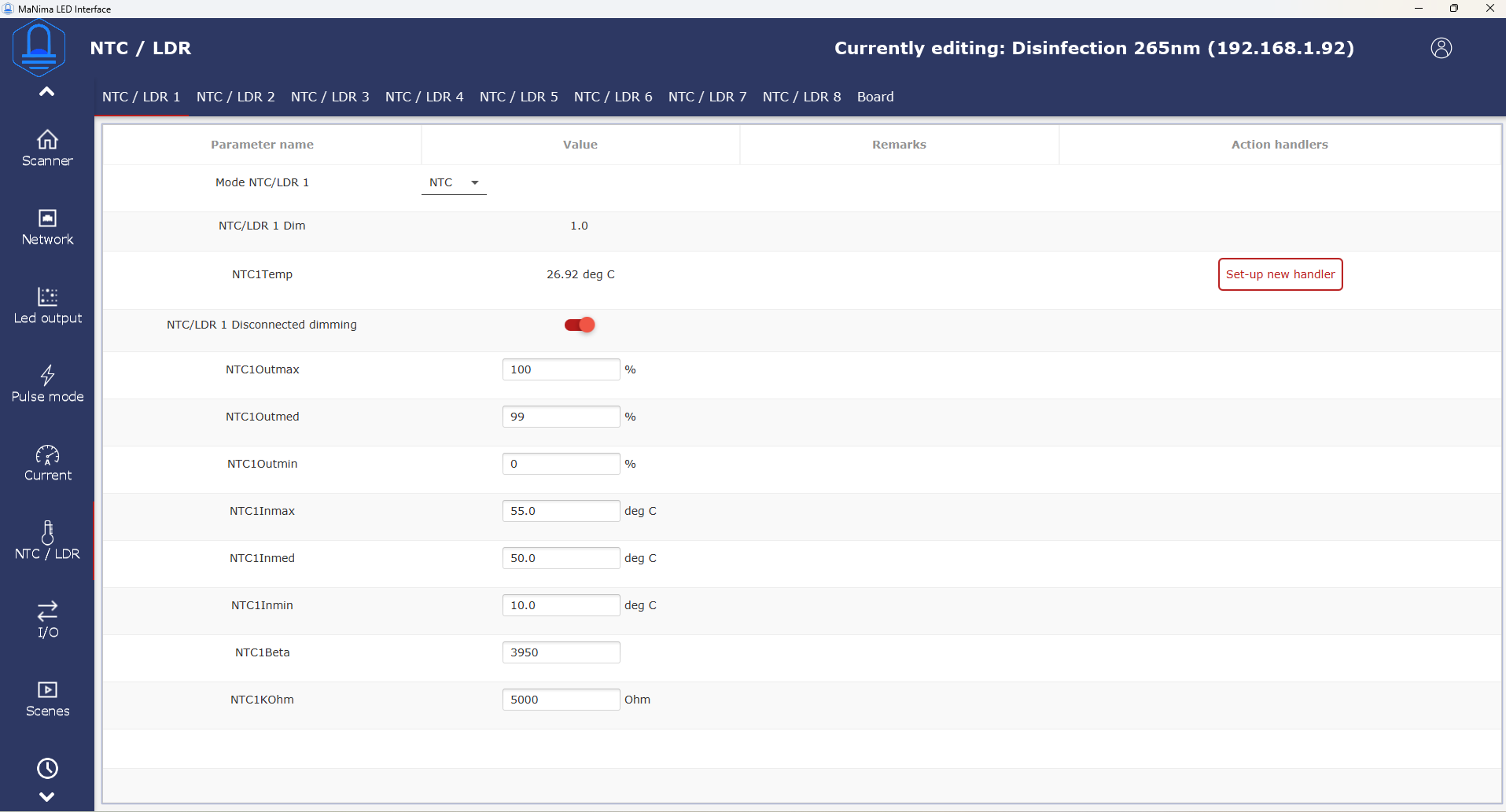
Real-time thermal management
With up to eight NTC temperatures measured in real time, thermal management runs as a closed loop: as a fixture approaches its limit the Nova dims the affected output and spins up cooling, keeping high-irradiance UV and process lighting safely inside its window.
Pulse mode for machine vision
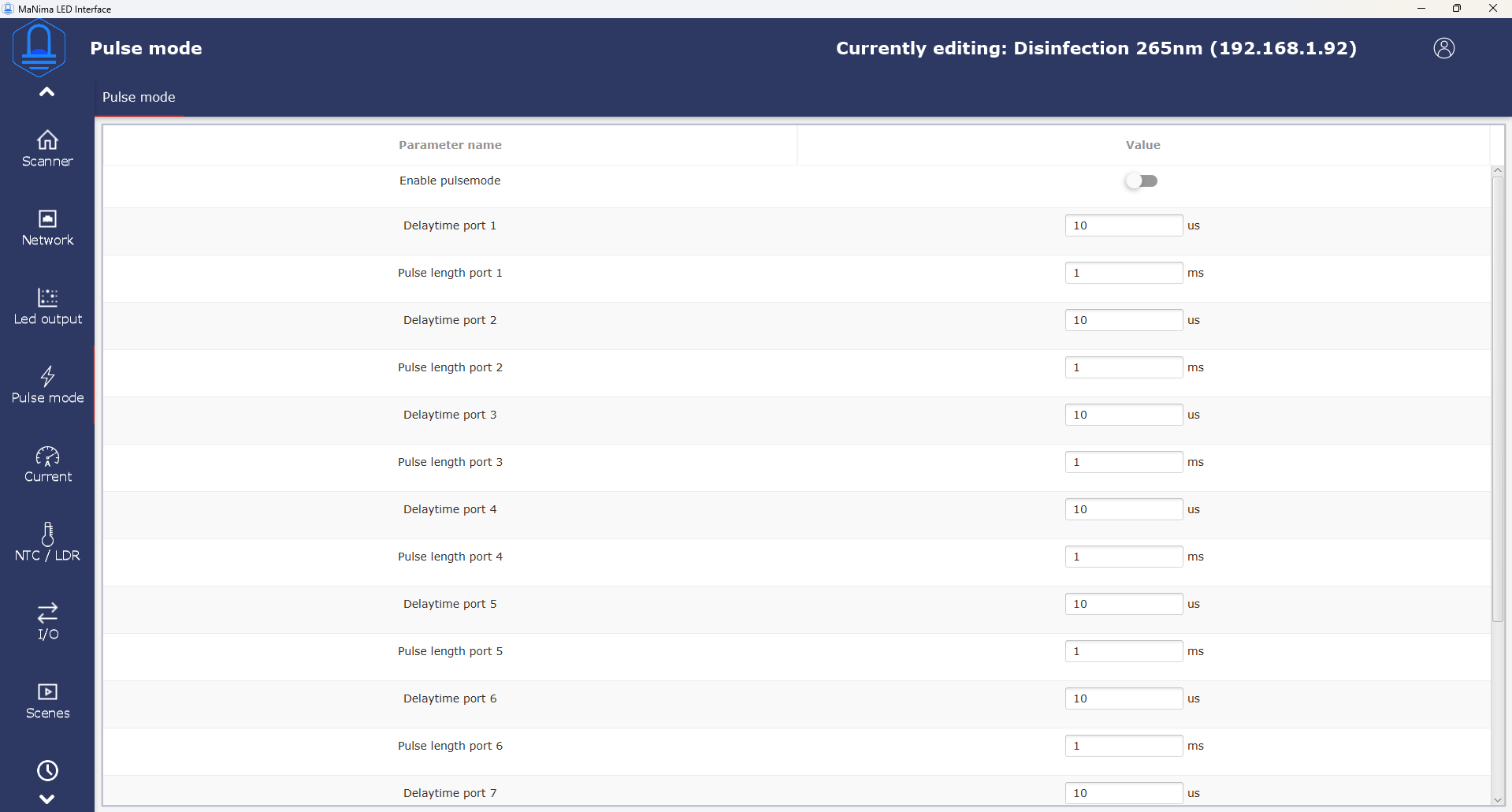
For the fastest processes, a dedicated pulse mode fires overdrive pulses from eight high-speed trigger inputs — one per channel. Pulses fire straight from a hardware signal, periodically or at a fixed delay after a trigger, so the lighting synchronizes deterministically with a moving line or a camera exposure. It is built for machine vision and high-speed inspection across VIS, NIR and SWIR.
Networking & daisy-chaining
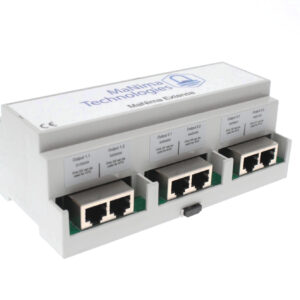
Two Ethernet ports with an onboard switch let you daisy-chain multiple drivers along a single network run instead of home-running every unit back to a central switch. Cabling stays short in long production lines, while a controller or the MaNima Cloud still reaches every driver on the chain.
Hardware-based protection
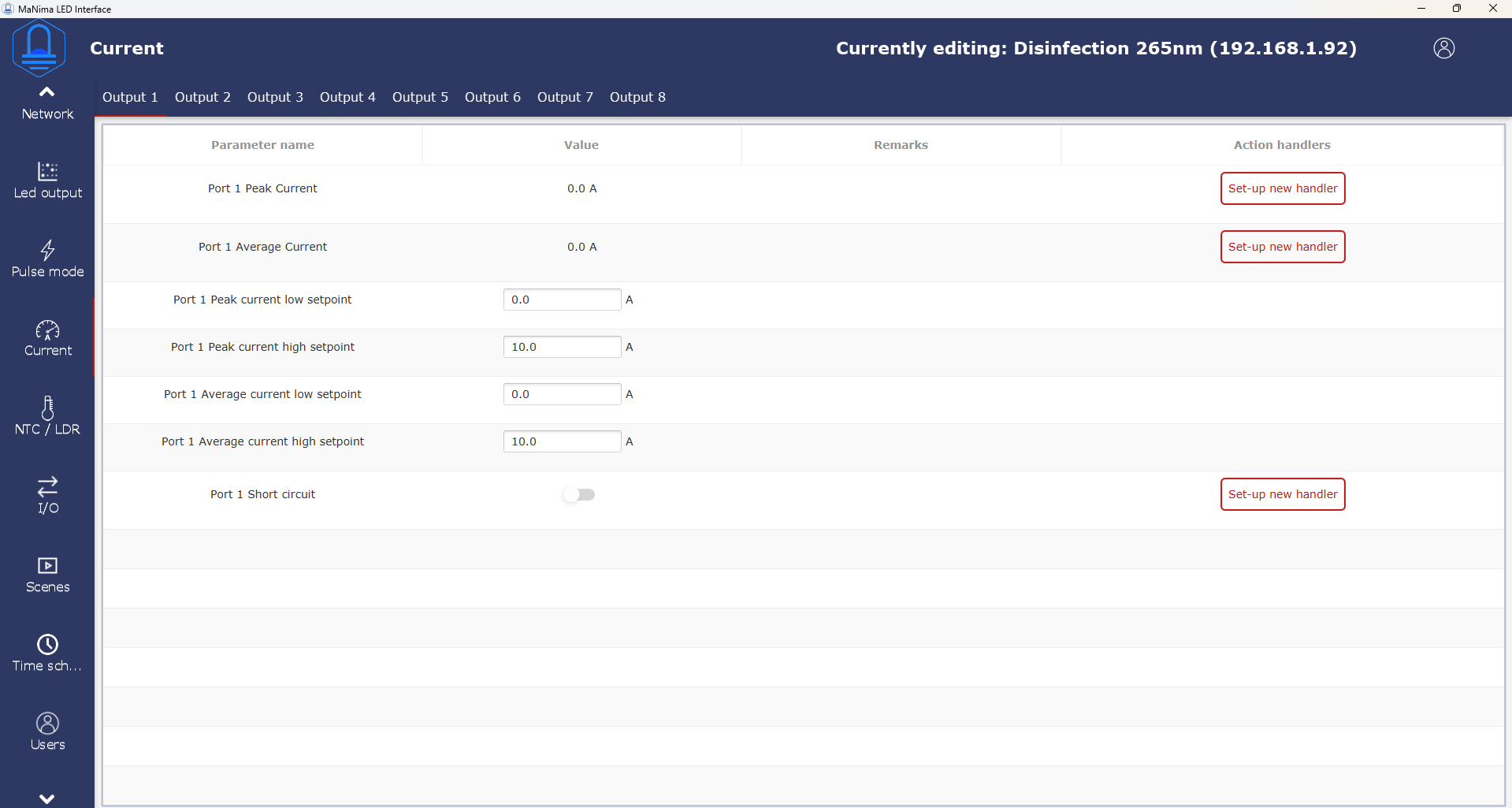
Protection is layered and hardware-based. Each output has its own short-circuit and overcurrent protection that limits the current within 10 µs, independent of the firmware — predictable even during a software fault. Reverse-polarity protection, input overvoltage protection and board-temperature monitoring complete a driver built to safeguard both itself and the equipment it feeds.
Measurement, triggers & monitoring
The Nova measures each output current individually and reads temperatures continuously, turning those measurements into action. Configurable thresholds can disable an output, switch a scene or raise an alarm the moment a value leaves its safe window — locally, in hardware, without waiting on a supervisory system.
Full redundancy
For safety-critical installations the Nova can be wired fully redundant. Both supply voltages are measured and can trigger a notification through the MaNima Cloud — an extra layer of protection the Nova builds into your system.
Built to integrate
Configuration and read-out run through the MaNima Cloud, or locally through the MaNima Configurator where no internet connection is available, with an extensive API that exposes control to third-party systems. Between its configurable PADIO I/O, hardware-level protection and closed-loop cooling, the Pollux Industrial Nova drops straight into demanding industrial systems — and protects everything downstream of it.