
MaNima Magnus — Digital LED Controller
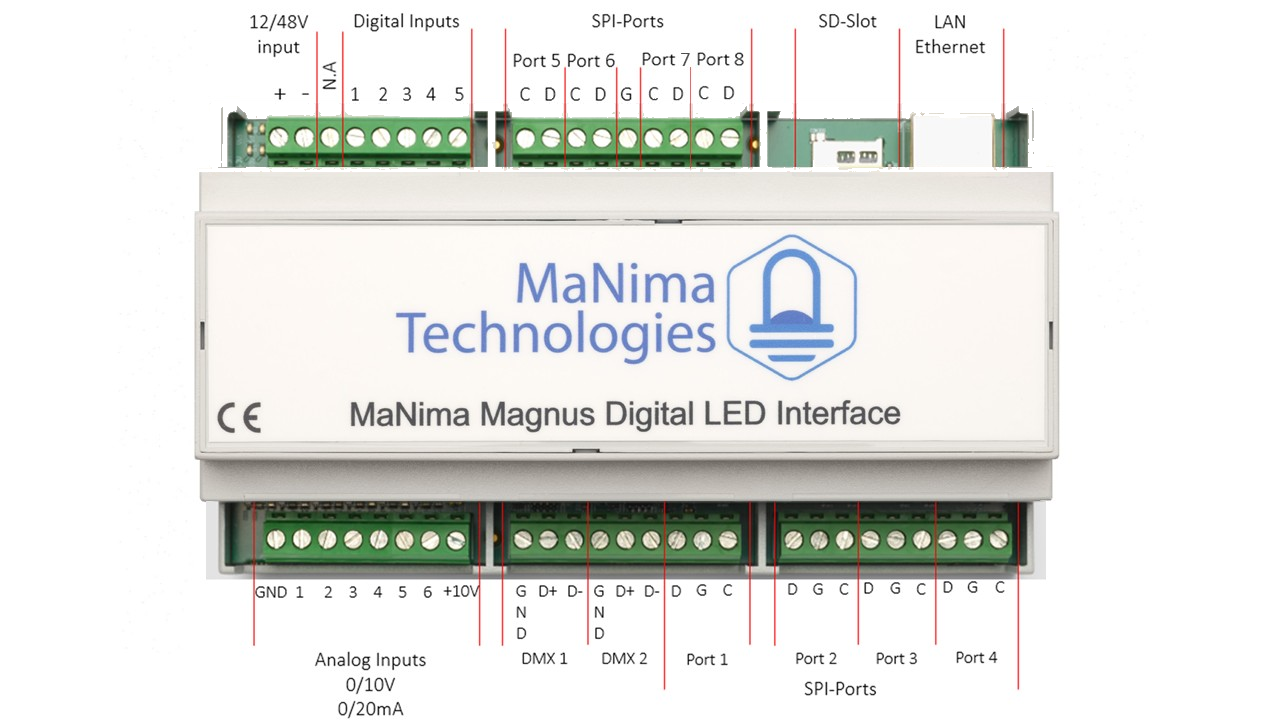
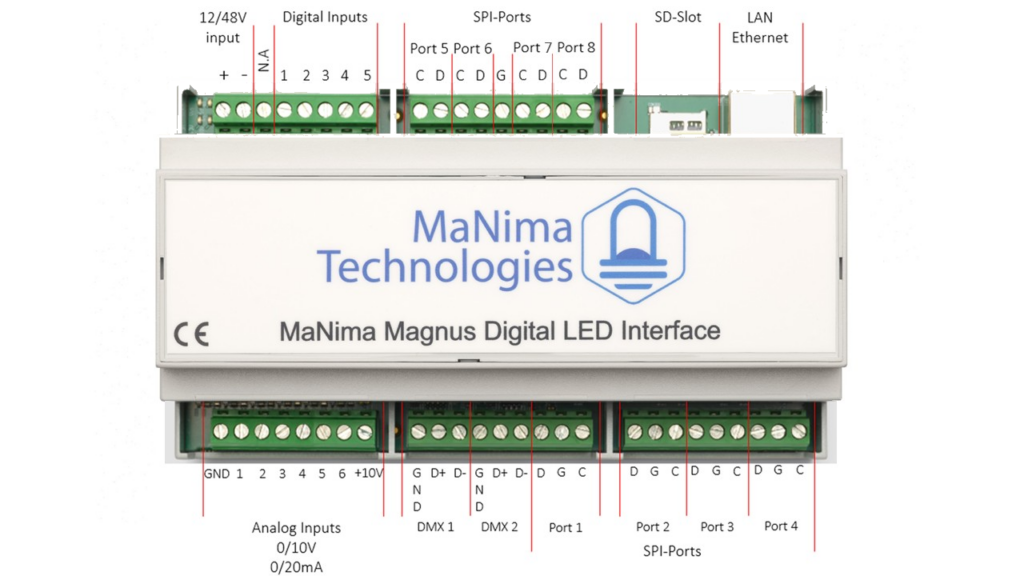
The MaNima Magnus is a digital LED controller for installations that have to be driven precisely, from more than one source, and keep running without a PC. It drives eight independent SPI outputs, each carrying up to 6 universes or 3072 channels — 1024 RGB or 768 RGBW pixels per port — with 26 universes across the device as a whole, and supports over 50 digital LED protocols.
Where the pixel data comes from is a matter of configuration rather than of wiring. Art-Net, two DMX ports, six analog inputs, five digital inputs, five SD-card players and a synchronized master-slave stream are all available at the same time. An input-output matrix decides by priority which source reaches the outputs, so an installation can run a stored scene by default and hand control to a console, a mapping PC or a PLC the moment one appears.
One set of outputs, many sources
Every input source has a fixed place in the priority chain, from blackout at the bottom to the identify function at the top. Nothing has to be switched over by hand and nothing depends on which cable is plugged in: the highest-priority active source wins, and control returns to the previous source as soon as it drops away. This deterministic behaviour is what makes the Magnus equally at home on an architectural facade and in a machine enclosure.
Live and standalone playback
The Magnus works as a live player and as a standalone player. Digital LED engines are driven over Art-Net or sACN from mapping software such as ELM, Resolume or MADRIX®, and the WYSIWYG recording function writes the live program straight to the SD card. Five independent players replay those recordings without a network, a controller or a PC in the loop. Players can start at boot, repeat a set number of times or loop indefinitely, and offer several loop methods — autoloop, bounce, fade and fade-and-bounce.
Two configurable DMX ports
Both DMX ports are configured independently as input or output. As a master the port sends a configured universe to external DMX equipment; as a slave it receives a universe and maps channels to functions; as an input source it feeds pixel data directly to the LED outputs. That makes the Magnus a DMX-to-SPI or DMX-to-Art-Net converter as well as a DMX-controlled device.
Triggers from every input
Scenes are started, paused, stopped and selected by triggers from any input on the device — a DMX channel, a dry contact on one of the five digital inputs, a 4–20 mA or 0–10 V signal on one of the six analog inputs, an HMI touchscreen, or a command over the UDP API. Analog inputs can also be mapped straight onto the LED outputs, so a sensor value becomes light output without an intermediate controller.
Segments and built-in effects
Each output can be divided into individual segments, and every segment can be given its own Art-Net universe, colour or on-board effect. Snake, rainbow, colour and linked-DMX effects run on the device itself, which keeps a large installation alive and moving even when no external source is connected.
Synchronized playback across multiple devices
When one device does not provide enough outputs, several Magnus units are combined in master-slave mode within a group. There is no practical limit to the number of slaves, any device can be made master, and playback stays frame-synchronous across the whole group — also after the units have already been configured and recorded.
Temperature-based safety dimming with the MaNima Pollux
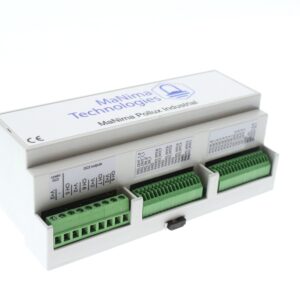
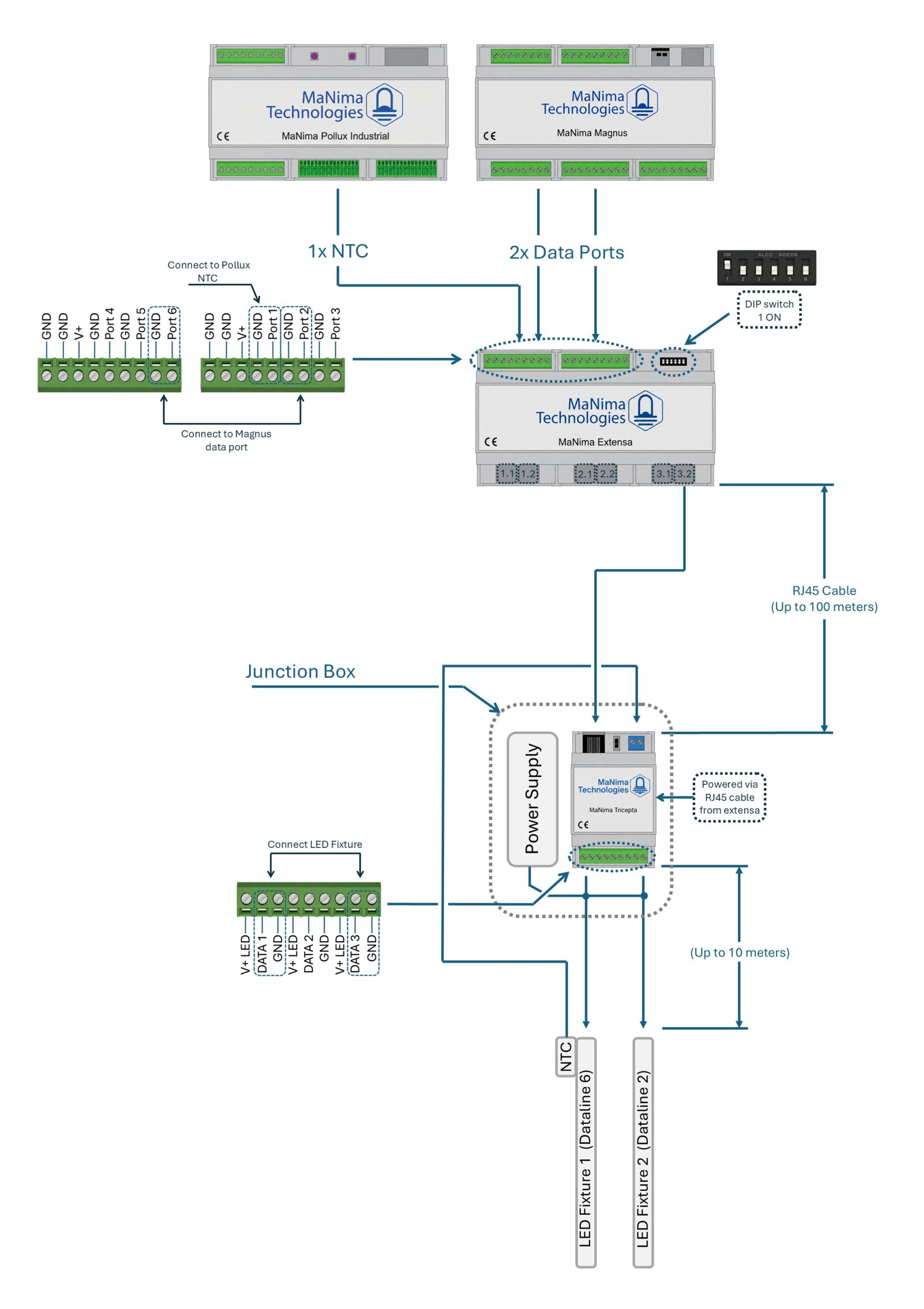
A MaNima Pollux registered as an extension gives the Magnus access to its NTC temperature sensors. When measured fixture temperature rises, the Magnus dims the installation automatically, protecting the LED engines and extending their service life. Registration is by MAC address, so the link survives a change of IP address.
Configuration, remote monitoring and integration
The MaNima Configurator finds every MaNima device on the network with its scanner and configures the complete system from a single PC. The MaNima Cloud adds remote monitoring and control: device status, firmware, dimming, players, universes and configuration back-up and restore, from any location. For deeper integration the Magnus exposes a UDP API, and the MaNima HMI provides custom touchscreen control on site.
Installation
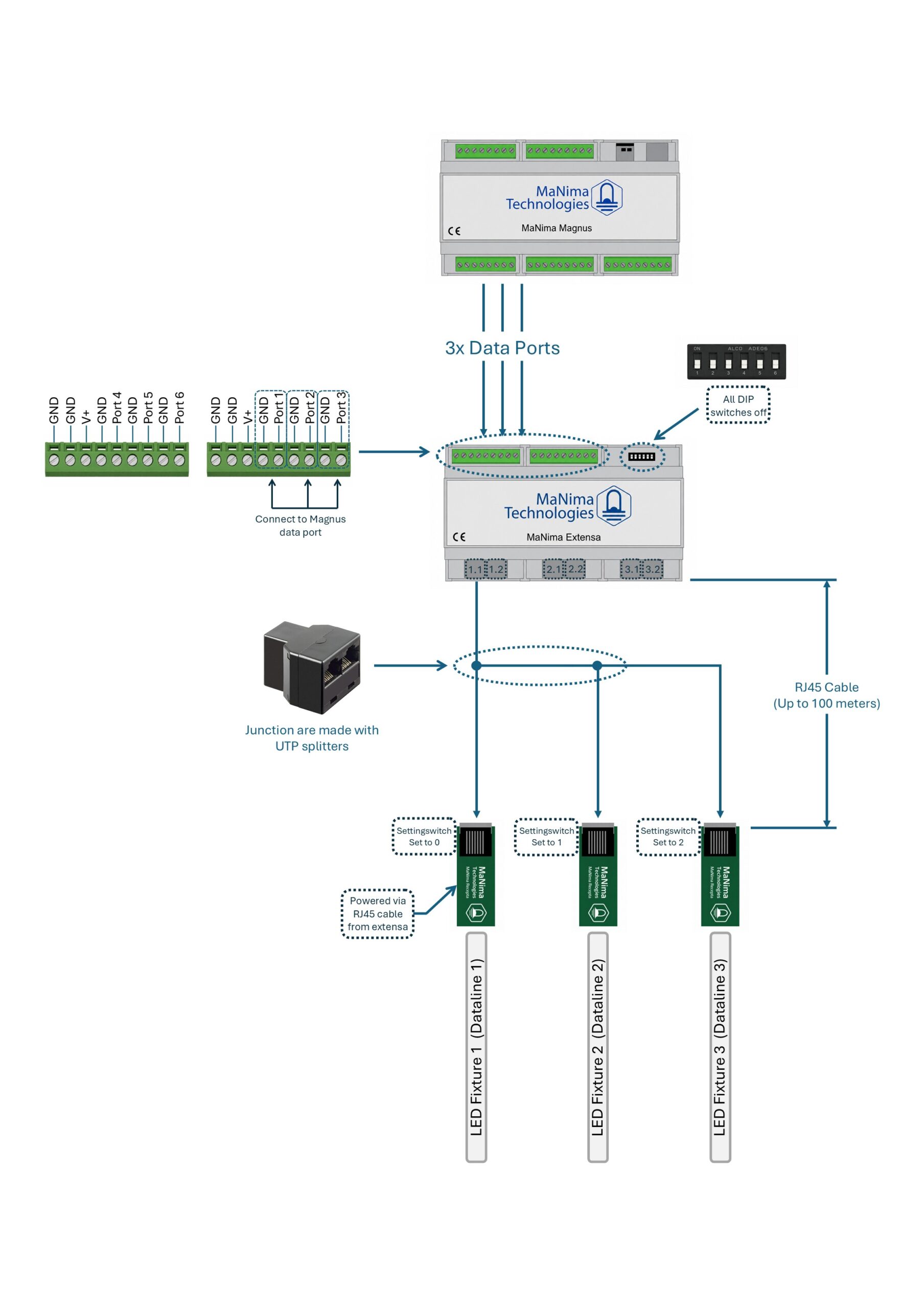
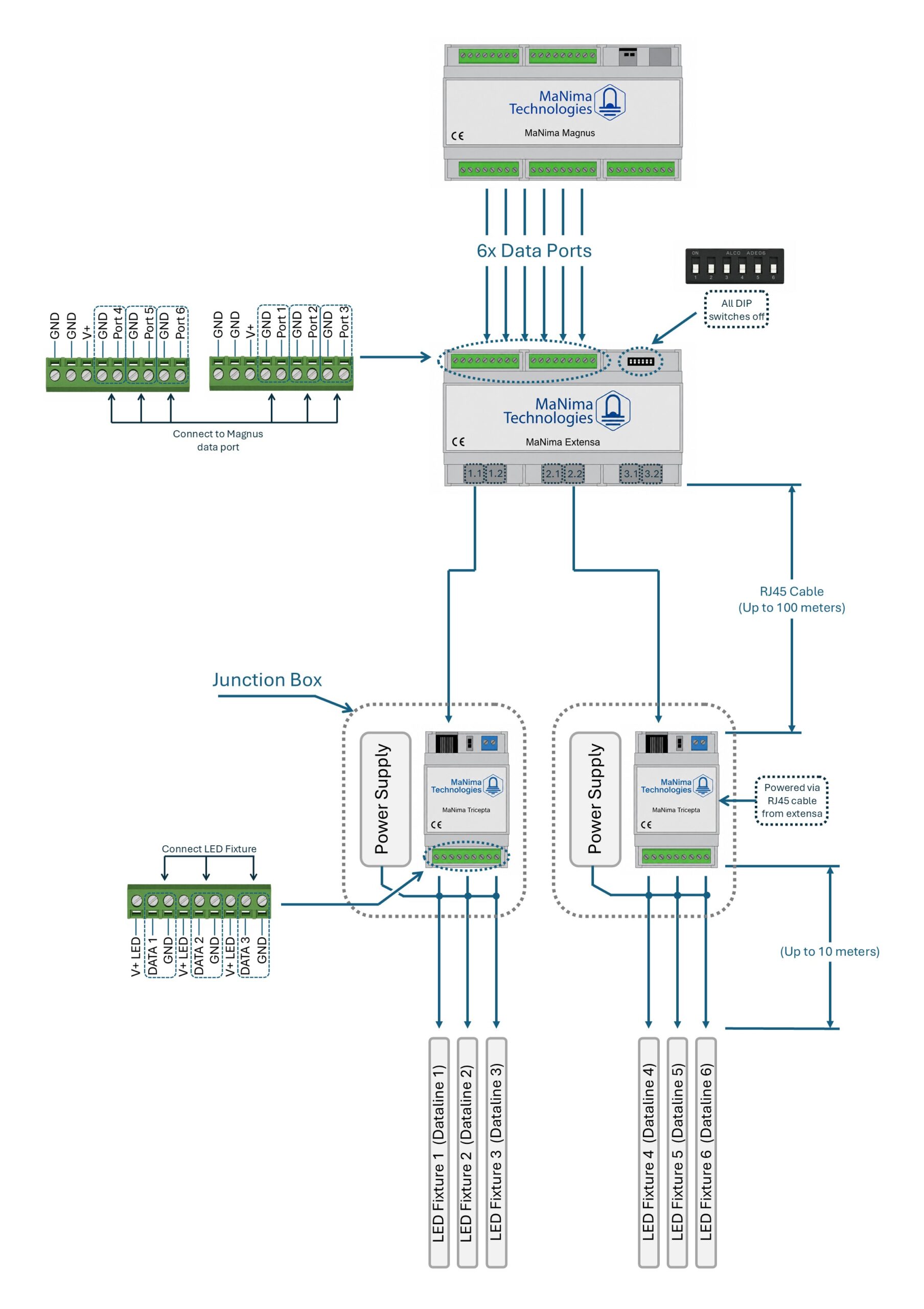
The Magnus mounts on a 35 mm DIN rail in a DIN 43880 enclosure of 3 units and is wired with fitted screw terminals — no mating connectors to buy. It accepts a wide 12–48 V input with polarity and overvoltage protection. SPI outputs run up to 10 m; a MaNima Extensa extends that reach to 100 m.
Technical specifications and downloads
Full pinout descriptions, electrical specifications and mechanical drawings are in the datasheet and user manual below. The complete list of supported LED chips is on the LED type support page.